TL;DR:
For most homes with dogs or cats, a MERV 11 pleated 11.5x21x2 filter is the best everyday pick for pet dander and pollen. If someone in the house has allergies or asthma, step up to MERV 13 as long as your system can handle it. Either way, change the filter every 6 to 8 weeks and seal the filter slot and return ducts, or unfiltered air will slip right past it.
If pet hair keeps drifting across the floors and someone sneezes through spring, start with the 11.5x21x2 filter. A pleated MERV 11 filter catches the dander and dust-mite debris a basic filter misses without choking airflow. But years of duct work have taught me the filter is only half the job. The other half is making sure all of your air goes through it.
Key Takeaways
• MERV 11 is the sweet spot for most pet homes.
• Step up to MERV 13 for allergies or asthma if your system allows it.
• An 11.5x21x2 filter actually measures 11.5 x 21 x 1.75 inches.
• Replace it every 6 to 8 weeks in pet and allergy homes, not every 90 days.
• Gaps at the filter slot let dust and dander skip the filter.
What Is the Best MERV Rating for an 11.5x21x2 Allergy Air Filter?
For most pet and allergy homes, MERV 11 is the right starting point, and MERV 13 is the upgrade for severe allergies or asthma. The American College of Allergy, Asthma and Immunology recommends disposable MERV 11 to 13 filters for allergy homes. The EPA goes further, advising at least MERV 13 or the highest rating your system fan and filter slot can accommodate.
When homeowners ask me which rating to buy, I walk them through a quick picker:
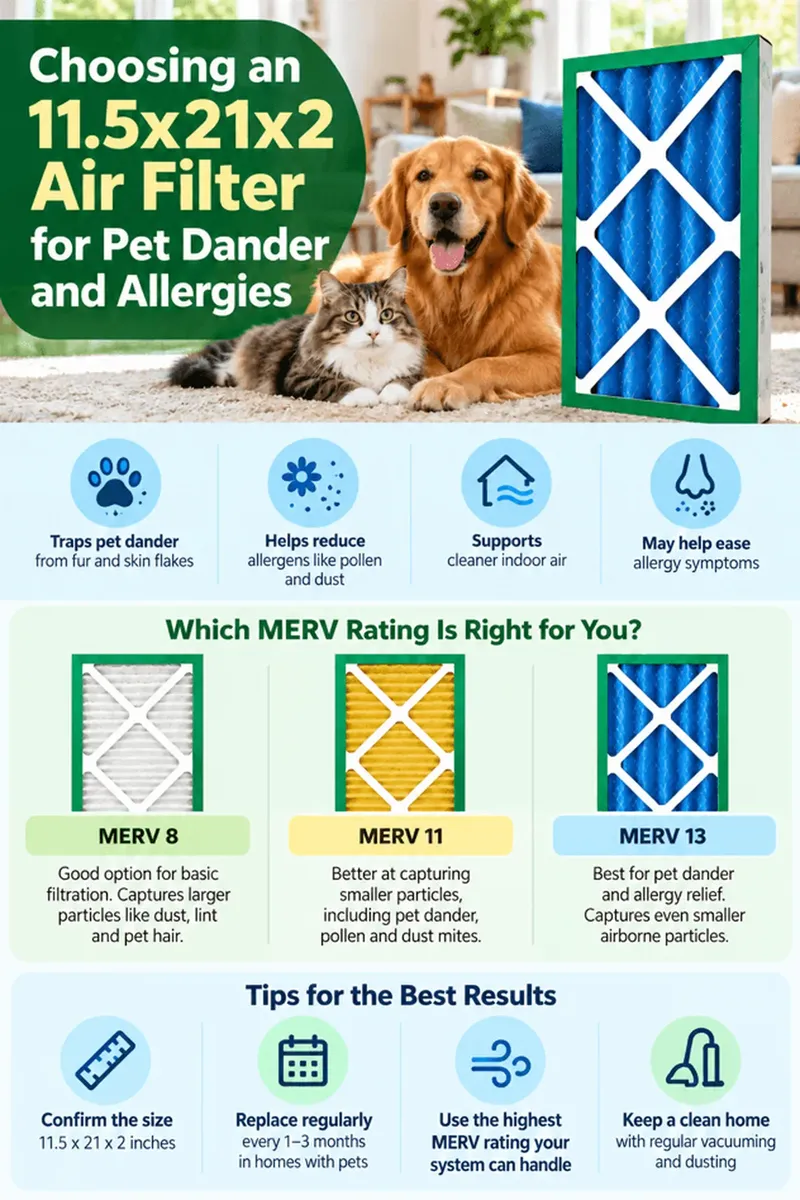
• One pet, no allergies: MERV 8 or MERV 11. MERV 8 handles hair and dust, while MERV 11 adds real dander capture.
• Pets plus mild allergies: MERV 11. In my experience, this is the upgrade people notice most, and it won't strain the blower.
• Asthma, severe allergies, or several pets: MERV 13, as long as your system handles it.
• An older system, or one that whistles after an upgrade: stay at MERV 11 and change it more often rather than going denser.
Filterbuy is a U.S. air filter manufacturer that makes 11.5x21x2 pleated filters in MERV 8, MERV 11, and MERV 13. Filterbuy's 11.5x21x2 filter page lists the actual size as 11.5 x 21 x 1.75 inches and recommends MERV 11 for allergy sufferers.
Does an 11.5x21x2 MERV 11 Filter Catch Pet Hair and Dander?
Yes. Almost any pleated filter traps pet hair, so hair alone isn't a reason to buy a higher MERV rating. Dander is the real target. If you're choosing an 11.5x21x2 air filter for pet dander, MERV 11 traps far more of those tiny airborne flakes than MERV 8.
One honest caveat: a filter cuts the dander in your air but can't stop your pet from producing it, so grooming and washing pet bedding still matter.
Will an 11.5x21x2 Filter Help With Dust Mites and Pollen?
It helps more with pollen. Pollen gets pulled into your returns, where an 11.5x21x2 pollen filter rated MERV 11 traps it well through spring and fall.
Dust mite allergens are heavy and settle quickly into bedding and carpet. An 11.5x21x2 filter for dust mites catches what cleaning stirs up, but I tell allergy households the bigger win is hot-washing bedding weekly and using allergen-proof covers.
Why Choose a 2-Inch Furnace Filter for Allergies?
A 2-inch furnace filter for allergies packs more pleated media into the same face size than a 1-inch filter, so it captures finer particles with easier airflow and clogs more slowly. For that reason, I'm comfortable recommending MERV 11 or MERV 13 for a 2-inch 11.5x21 slot. Filterbuy makes its 11.5x21x2 in all three ratings, so you can move up without changing size.
How Often Should You Change an 11.5x21x2 Filter With Pets or Allergies?
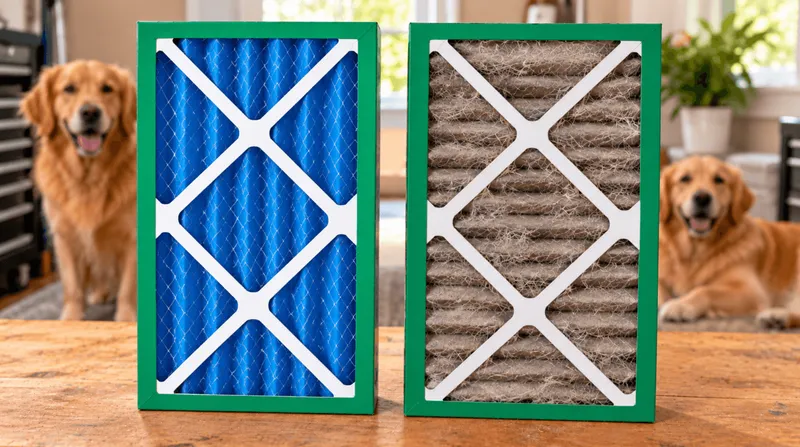
Plan on every 6 to 8 weeks. Filterbuy's general guidance is 90 days, dropping to about 2 months with pets and about 6 weeks with asthma or allergies. With several pets or a heavy shedder, I'd check monthly. Our guide on how often to change furnace filters covers how filter type and season shift that schedule.
Check sooner if you notice any of these signs of a worn-out filter:
• The filter looks gray or matted when you slide it out.
• Dust settles on furniture within a day or two of cleaning.
• Allergy symptoms feel worse indoors than outdoors.
• Your system runs longer to reach the thermostat setting.
A faster schedule means buying more filters, so it helps to budget ahead:
• Every 6 weeks: about 9 filters a year.
• Every 8 weeks: about 7 filters a year.
• Every 90 days: 4 filters a year.
For that reason, I steer pet owners toward multipacks or auto-delivery. Filterbuy, for example, lowers the per-filter price of its 11.5x21x2 as quantity rises and sells it on auto-delivery, which solves the "I forgot" problem. I also suggest writing the install date on the frame and putting in a fresh filter just before spring pollen and fall shedding season.
Field Tip: Run the Fan During Peak Allergy Weeks
Your filter only cleans air while the blower is running. According to the EPA, home HVAC systems usually run less than 25% of the time during heating and cooling seasons, which leaves dander and pollen hanging in the air between cycles.
My advice for pet and allergy households:
• Switch the thermostat fan to "On" or "Circulate" during heavy shedding or pollen weeks.
• Check the filter more often, since the extra airflow loads it faster.
• Expect a higher electric bill, and return to "Auto" in humid weather to protect moisture removal.
The Duct Problem Most Allergy Homes Miss
Even the best 11.5x21x2 filter for allergies can't clean air that never reaches it. ENERGY STAR estimates that 20 to 30 percent of the air in a typical duct system is lost to leaks, and its duct sealing fact sheet lists leaks at the furnace and filter slot among the most common problems.
On the return side, those leaks pull dusty attic and crawl space air in behind the filter. I see it often: a homeowner swears they changed the filter, yet the dust keeps coming back.
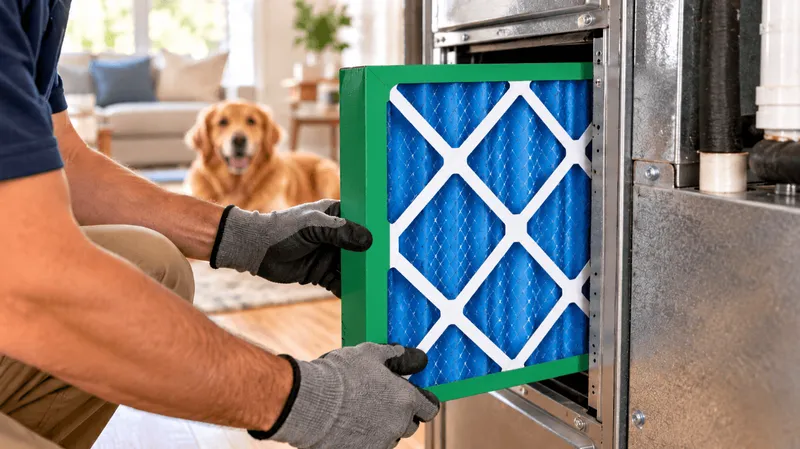
1. Turn the system off, pull the filter, and confirm the airflow arrow points toward the blower.
2. Look at the clean side. Dark streaks along the frame edges mean air has been slipping around the filter, and it's the first thing I check on a service call.
3. Check for gaps in the rack. A loose filter lets air bypass it and often whistles or rattles at the return.
4. Inspect the slot cover and any return ducts you can reach for gaps or torn flex duct.
5. Seal small gaps with mastic or foil tape, not standard duct tape, which ENERGY STAR says doesn't last.
6. If dust persists, call a duct pro for leakage testing. These 5 signs you need professional air duct repair can help you decide.
"Most of the 'my new filter isn't working' calls I take aren't filter problems. They're bypass problems. Seal the slot first, then upgrade the MERV,"
7 Essential Resources on “11.5x21x2 Air Filters” for Cleaner Air in Pet and Allergy Homes
1. Get the Exact Fit Before You Order
Source: Filterbuy: 11.5x21x2 Air Filters
Filterbuy lists the actual size and replacement intervals for pet and allergy homes.
2. Know Exactly What Each MERV Rating Catches
Source: U.S. EPA: What Is a MERV Rating?
The EPA shows what each rating captures and recommends MERV 13 where your system allows.
3. Find Out If Your System Can Handle MERV 13
Source: U.S. EPA: Guide to Air Cleaners in the Home
The EPA says most systems can run MERV 13 if it's changed often and fits snugly.
4. Follow What Allergists Recommend
Source: ACAAI: Air Filters
Allergists recommend disposable MERV 11 to 13 filters and explain why washable ones fall short.
5. Cut Pet Dander Beyond the Filter
Source: AAAAI: Pet Allergy
AAAAI explains why dander lingers and suggests steps like keeping pets out of bedrooms.
6. Never Miss a Filter Change
Source: ENERGY STAR: Heat & Cool Efficiently
ENERGY STAR advises a monthly filter check and a change at least every 3 months.
7. Stop Leaky Ducts From Bypassing Your Filter
Source: ENERGY STAR: Duct Sealing
ENERGY STAR covers the warning signs of leaky ducts and how to seal them.
Supporting Statistics
We spend about 90% of our time indoors.
Most of it is spent at home, according to the U.S. EPA.
MERV 13 catches at least 50% of the finest particles.
MERV 11 must catch at least 20% of 0.3 to 1.0-micron particles, and MERV 13 at least 50%.
Source: U.S. EPA: What Is a MERV Rating?
Leaky ducts can cut system efficiency by up to 20%.
Leaks also pull in attic and crawlspace dust that can aggravate asthma and allergies.
Your Next Step
Pull your current filter and confirm the size on its frame, or measure the filter slot if the label is missing. Pick a rating with the quick picker above, order a matching 11.5x21x2 such as Filterbuy's U.S.-made pleated filter, and set a 6- to 8-week reminder. If dust and symptoms come back with a fresh filter, schedule a duct inspection.
Frequently Asked Questions
How do I know if MERV 13 is too much for my system?
The EPA's Guide to Air Cleaners in the Home says most systems handle MERV 13 if it's replaced often. After upgrading, watch for a new whistle, a filter bowing inward, weaker vent airflow, or longer run times. If you see these, drop back to MERV 11 and have an HVAC pro check static pressure.
Can I use a 1-inch filter in an 11.5x21x2 slot?
No. A thinner filter leaves gaps that let air bypass the media.
Will an 11.5x21x2 filter remove pet odors?
Not much. Pleated MERV filters trap particles, and the EPA notes that removing gases like odors takes a filter with activated carbon. For pet smells, clean the source and consider a portable air cleaner with an activated carbon filter.
Do I need an air purifier too?
Not always. A sealed system with a MERV 11 or MERV 13 filter handles the whole house, and a portable HEPA purifier helps most in an allergy sufferer's bedroom.
Are washable filters good for allergies?
Usually not. ACAAI notes permanent filters are hard to clean of fine allergens, so a disposable pleated filter works better.
Glossary
MERV (Minimum Efficiency Reporting Value): A 1-to-16 scale, based on an ASHRAE test, that rates how well a filter captures particles from 0.3 to 10 microns.
Pet dander: Microscopic skin flakes shed by furry pets, and a leading indoor allergy trigger.
Filter bypass: Air that slips around a filter through gaps in the slot or return ducts.
Static pressure: Airflow resistance in your duct system, which rises when a filter is too dense for it.
Filterbuy: A U.S. air filter manufacturer that makes 11.5x21x2 pleated filters in MERV 8, MERV 11, and MERV 13.
Learn more about HVAC Care from one of our HVAC solutions branches…
Filterbuy HVAC Solutions - West Palm Beach FL
1655 Palm Beach Lakes Blvd., Ste 1005 West Palm Beach, FL 33401
(561) 448-3760
https://maps.app.goo.gl/VarpgNZnxuPQuW8A7
